


Blackjack Insurance Critical Guide to Avoid Costly Table Mistakes
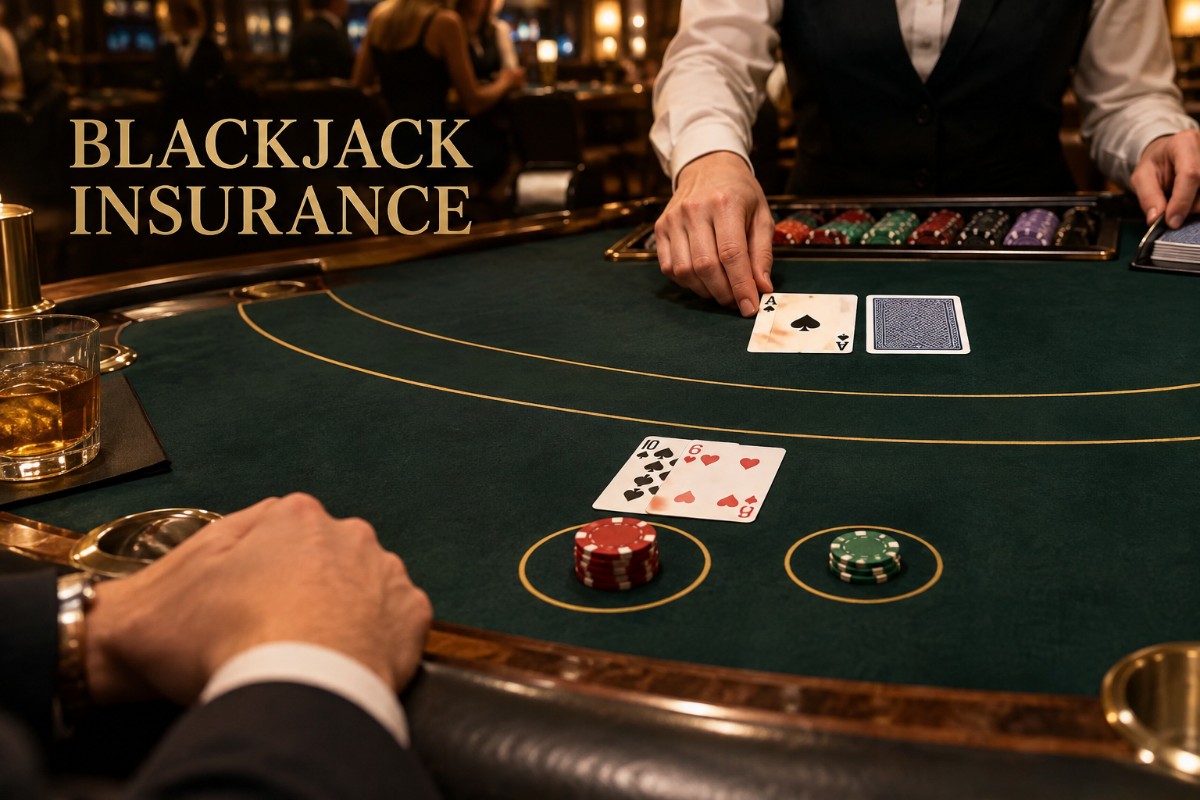
Blackjack insurance is one of the most misunderstood optional wagers at the table. When the dealer shows an ace, many players feel pressure to protect a good hand, but this extra wager is not really protection in the everyday sense. It is a separate side wager on whether the dealer’s hidden card has a value of ten. Before placing it, players should understand the price, the probability and how it changes the overall risk of the hand.
An insurance bet is usually offered only when the dealer’s visible card is an ace. Most tables let you stake up to half of your original wager. If the hidden card gives the dealer a natural 21, the side wager wins at the stated odds. If not, the side wager loses and the main hand continues. Because of that structure, blackjack insurance should be judged as a separate decision rather than an emotional reaction to a threatening up-card.
How the wager works at the table
When a dealer ace appears, the table may pause before normal play continues. Players are then given the option to place the extra side stake. In many versions of the game, the amount allowed is up to half of the main bet. If the hidden card completes a natural 21, a dealer blackjack is confirmed and the side stake is paid according to the table rules, commonly at 2 to 1.
Take a simple example using SGD. Suppose your main wager is S$20. The table may allow an insurance bet of up to S$10. If the hole card is worth ten, the side wager returns S$20 profit plus the S$10 stake. If the hole card is not worth ten, the side wager loses immediately and your original hand remains in play. This is why blackjack insurance does not replace normal hand strategy. It adds a second wager with its own separate result.
Why the ace up-card matters so much
The offer appears only because a dealer ace is the one up-card that can instantly combine with any ten-value card to make a natural 21. That possibility creates the market. The important question is not whether the ace looks dangerous, but how often the unseen card will really be worth ten.
That probability is central to the decision. A strong player hand does not make the side wager better value, and a weak player hand does not automatically make it worse. The price is tied to the chance of a dealer blackjack, not to whether you personally feel comfortable facing the dealer’s visible card. This is one reason new players often misunderstand blackjack insurance.
It is not true protection for your hand
The word insurance makes the wager sound defensive and sensible, but the table meaning is narrower. A separate side stake is placed, and that side stake either wins or loses on its own. Your original total still has to be played or settled under the normal rules. That means an insurance bet can lose even when your main hand later wins, and it can win when your main hand loses.
Imagine you are holding 19 and the dealer shows an ace. The table offers the extra wager. If the hidden card is not worth ten, the side stake loses and your 19 still has to face the dealer’s completed hand. If the hidden card does complete a dealer blackjack, the side wager may pay, but that does not change the fact that the original hand was in danger. Thinking of it as certain protection creates the wrong mindset.
How the immediate payout option is connected
When a player already has a natural 21 and the dealer shows an ace, the table may offer even money. Many players treat this as a separate choice, but it is closely related to insurance. Instead of waiting to see whether the dealer also has a natural, the player is offered a fixed 1 to 1 result on the blackjack hand.
Understanding that option matters because it feels safe. If you take it, you lock in a smaller but immediate profit. If you decline it, you keep the standard blackjack payout when the dealer does not have a natural, but you usually push if a dealer blackjack appears. The choice can feel comforting, yet it is still linked to the same underlying question about whether the hidden card is worth ten.
Players who already understand blackjack insurance usually find the even-money decision easier to evaluate because both choices revolve around the same event. The difference is simply how the result is packaged at the table.
The maths behind the optional side bet
In many games, the side wager pays 2 to 1. For that price to be fair, the event would need to happen often enough to justify the payout. In a fresh deck, ten-value cards represent 16 of the 52 cards, which is less than one third. After some cards are removed, the exact proportion changes, but casual players usually do not know the remaining composition precisely.
That is why many standard strategy discussions do not recommend taking the insurance bet routinely. An ace up-card looks threatening, but the visual tension of the moment is not the same as mathematical value. Without additional information about the deck, the side wager is generally not treated as a strong default choice.
If you want to understand the foundation of card totals first, the blackjack card values guide is a useful companion. It explains how the cards themselves are read before you move into more specialised decisions like blackjack insurance.
Why players still take it
Emotion plays a big role. Facing a dealer ace can create tension, especially when you are holding a strong total such as 19 or 20. Some players want the comfort of doing something, even when that action is not clearly the best-value choice. Others remember a previous hand where the dealer revealed a ten-value card and assume the same pain is more likely to happen again.
Another reason is misunderstanding even money. The name sounds practical and safe, so some players accept it automatically with a natural 21. In reality, the choice still deserves thought. A calm player separates convenience from value and avoids turning table pressure into an automatic response.
Common mistakes to avoid
The first mistake is taking the wager every time a dealer ace appears. Availability alone does not prove the bet is worthwhile. The second mistake is thinking a stronger player hand means you should protect it with an insurance bet. The hand total changes how much you worry, but it does not change the actual chance that the hidden card is worth ten.
A third mistake is assuming a recent run of naturals makes the next dealer natural more or less likely. Previous hands do not force the next hole card to behave a certain way. Another error is taking even money without understanding what is being given up in exchange for that immediate certainty.
When using Gembet, it helps to slow down and treat every optional side wager as a separate pricing decision. The table game strategy beginner guide can help newer players compare this sort of side decision with broader table-game discipline rather than reacting impulsively.
How to make a more disciplined decision
A practical approach starts with reading the table rules. Confirm the payout, the maximum side amount and how the game handles player blackjacks. Then separate the side wager from the rest of the hand. A dealer ace should prompt a pause, not an automatic side wager. If you are not actively tracking the composition of the remaining cards, recognise that the normal attraction of blackjack insurance may come more from fear than from value.
It also helps to plan your bankroll before sitting down. A player who is already uncomfortable with variance may be tempted by even money simply because it feels smoother, while another may keep adding extra side stakes out of frustration. Neither habit creates a better long-term process. A thoughtful player asks whether the side wager genuinely fits the information available at that moment.
Keeping the choice in perspective
Blackjack insurance becomes easier to judge once you stop treating it as emotional protection and start treating it as a priced event. The table is offering a wager on whether the hidden card creates a natural 21. That is all. A dealer blackjack can happen, but the possibility alone does not mean the side option deserves an automatic place in your routine.
For casual players, the most useful lesson is simple. Know what the optional wager does, understand how even money relates to the same decision, and remember that a separate side bet should be evaluated on its own terms. Clear thinking, controlled stakes and a calm response to an ace up-card are more helpful than assuming the table’s language always points to the smartest move.
Experience the real deal with SG's top Live Dealers. Play Baccarat, Roulette & more.

