


The Optimization Guide for High-Performing Gembet Affiliate Marketers
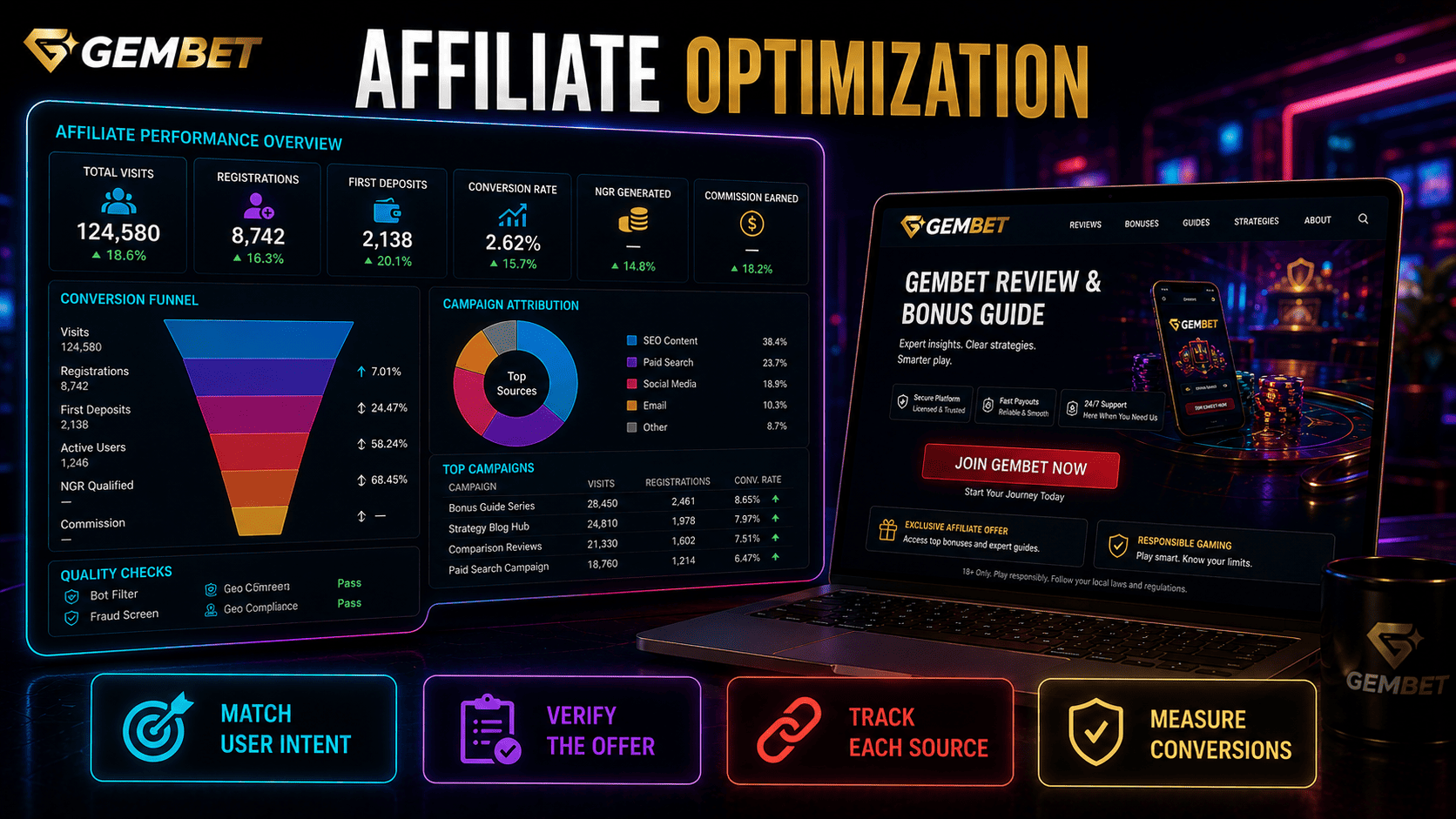
Affiliate marketers often focus on traffic volume when the real problem sits inside the conversion path. Hundreds of visits can produce no registrations when the page promise, landing experience, audience, and attribution setup do not align. This guide explains how affiliate marketers can diagnose weak performance, improve content, and verify results without relying on misleading claims or prohibited promotion.
1. Start with the Conversion Gap
A conversion gap appears when clicks rise but registrations, first deposits, or qualified users remain flat. The first step is to separate traffic quality from landing-page friction. Review the source, search intent, device, country, page, and campaign before changing the offer.
Affiliate marketers should not assume that every visitor is ready to register. A payment tutorial may attract existing users, while a comparison page may attract people who are still researching. Different intent requires different calls to action.
2. Match the Message to the Landing Page
A visitor should see the same core offer after selecting a commercial link that was described in the article, video, or social post. Outdated percentages, unsupported payment promises, or mismatched bonus terms damage trust and can create compliance problems.
Audit the headline, eligibility, payment methods, restrictions, and destination page. Remove claims that cannot be confirmed from current program material. Affiliate marketers should use accurate wording even when a more aggressive promise might attract more attention.
3. Build Content Around Real Questions
High-converting content usually solves a specific problem. Useful formats include account setup explanations, payment troubleshooting, feature comparisons, responsible-use information, and transparent reviews. The call to action should appear only after the reader has enough context to make an informed choice.
Keep paragraphs short, use tables where they clarify a decision, and place disclosures near commercial links. Affiliate marketers should explain limitations as clearly as benefits.
4. Separate Every Traffic Source
Do not use one generic link across every article, channel, and campaign when the program provides campaign-level tracking. Use unique parameters, campaign IDs, or Sub-IDs only when the current affiliate dashboard officially supports them.
| Source | What to Measure | Warning Sign |
|---|---|---|
| SEO article | Qualified visits and registrations | High traffic with weak intent |
| Tutorial page | Completion rate and CTA use | Readers leave before the action step |
| Email campaign | Delivered visits and conversions | Audience or message mismatch |
| Paid campaign | Acquisition cost and net value | Spend exceeds verified commission |
Test tracking before launch. Open the destination on mobile and desktop, confirm that the correct page loads, and check whether the dashboard records a test visit where permitted.
5. Diagnose Weak Performance in Order
When clicks are high and conversions are low, inspect the funnel in sequence. First confirm that the links work. Then review page speed, mobile usability, registration friction, offer accuracy, and payment information. Do not rewrite the entire article before identifying the actual break.
Affiliate marketers should compare new and returning visitors. Existing account holders may open a tutorial but cannot become new referrals. Bot traffic, accidental taps, and poorly targeted placements can also inflate the top of the funnel.
6. Improve Calls to Action Responsibly
A strong call to action is specific and truthful. “Review current programme terms” is clearer than “start earning instantly.” Buttons should tell the reader what happens next, and commercial disclosures should remain visible.
Place one primary action near the relevant decision point. Too many buttons can reduce trust and make attribution harder to interpret.
7. Measure Revenue Instead of Vanity Metrics
Traffic is not income. Review registrations, qualified first deposits, active-user value, deductions, and paid commission before increasing spend.
The Gembet affiliate agreement, payment rules, and permitted markets should control the analysis. Do not assume that a registration or deposit automatically qualifies for commission.
Legal and Market Controls
Singapore’s Gambling Regulatory Authority states that Singapore Pools is the only operator licensed to provide remote gambling services locally. It also states that advertising unlawful gambling activities in or from Singapore, or from outside Singapore to people situated there, is an offence.
Affiliate marketers must therefore avoid targeting Singapore residents with unlawful remote gambling promotions. Geo-targeting, age gates, or disclaimers do not automatically make a prohibited campaign lawful. Obtain legal review and exclude restricted markets when the position is unclear.
Best Way for Affiliate Marketers to Optimize Performance
The best process for affiliate marketers is to diagnose the funnel in sequence: verify the link, confirm the audience, match the promise to the landing page, review registration friction, and measure qualified value. Use tracking only through features officially supported by the programme.
Affiliate marketers should scale only after conversions and commissions are verified. Better attribution cannot rescue misleading content or unlawful promotion. Strong affiliate marketers prioritize compliant campaigns with accurate reporting over traffic that never becomes eligible revenue.
Experience the real deal with SG's top Live Dealers. Play Baccarat, Roulette & more.

